
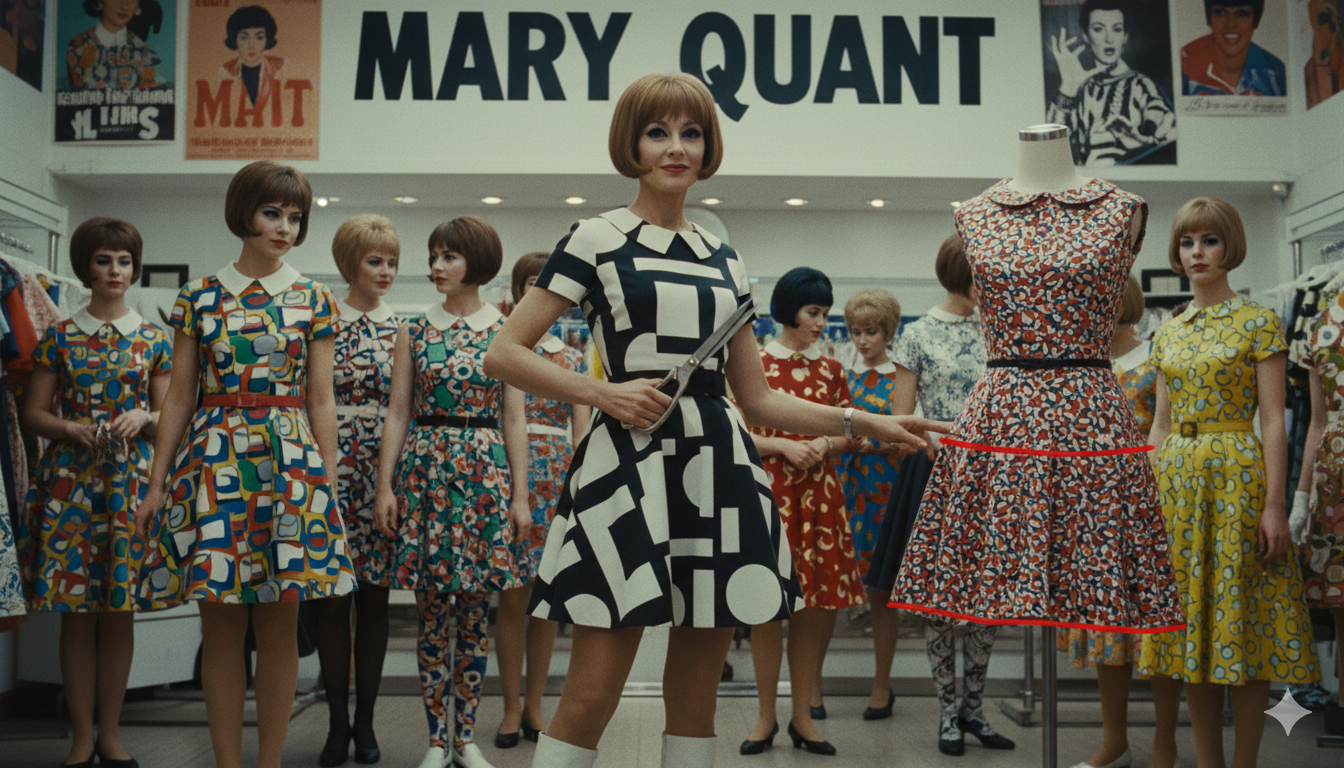
Have you ever looked at a miniskirt and wondered who had the guts to first cut the hemline that high? Meet Mariquant, also known as Dame Mary Quant. She wasn’t just a designer; she was a total firecracker who changed the way the world looks at clothes. Before she came along, young women often dressed just like their mothers. Imagine being 19 and wearing a stiff suit and a hat! Mariquant thought that was boring. She wanted fashion to be fun, short, and full of energy. Because of her, the “Swinging Sixties” became a time of bright colors and bold moves.
If you love being free to run and dance in your clothes, you have Mariquant to thank. She looked at the streets of London and saw that young people wanted something different. She didn’t wait for the fancy fashion shows in Paris to tell her what to do. Instead, she opened a little shop called Bazaar and started a revolution. Let’s dive into the amazing life of this fashion pioneer and see how she built a global brand that people still love today.
Who Was Mariquant? A Quick Biography
Mariquant was born Barbara Mary Quant in 1930 in London. Her parents were teachers who wanted her to have a steady job. But Mary had other plans! She was always playing with her clothes, even as a little girl. She would take apart hand-me-downs to make them look more like her own style. Eventually, she went to art school, which is where her big adventure really started.
| Detail | Information |
| Full Name | Dame Barbara Mary Quant |
| Born | February 11, 1930 |
| Place of Birth | Blackheath, London, England |
| Died | April 13, 2023 |
| Famous For | Popularizing the Miniskirt & Hot Pants |
| Business Partner | Alexander Plunket Greene (Husband) |
| Iconic Logo | The Black Daisy |
| Major Awards | OBE (1966), DBE (2015) |
The Birth of the Miniskirt Revolution
When people hear the name Mariquant, they immediately think of the miniskirt. While there is a lot of debate about who actually “invented” it, Mary was the one who put it on the map. She named it after her favorite car, the Mini Cooper! She wanted skirts that were short enough so women could run for the bus or dance without tripping. It was all about freedom and being yourself.
This wasn’t just about showing some leg. The miniskirt was a sign of a new generation. Young women in the 1960s were working, going to school, and wanting to be heard. Mariquant gave them a uniform that felt powerful. It was a huge hit because it was daring and different. Even today, the “mini” is a staple in almost every closet because of her vision.
Opening Bazaar: The Shop That Changed Everything
In 1955, Mariquant opened her first shop, Bazaar, on King’s Road in Chelsea. This wasn’t a stuffy department store. It was more like a party! There was loud music, free drinks, and windows that stayed lit up late at night. People would crowd around just to see the latest crazy designs. It was the heart of the “Chelsea Girl” look.
Because she didn’t have much money at first, Mary would sew her designs at night and sell them the next day. If a dress sold well, she would use that money to buy more fabric. This meant the shop always had something new. It was fresh and exciting, and soon even famous people like The Beatles were stopping by. Mariquant turned shopping into a fun experience for everyone.
Why the Black Daisy Logo Matters
Every great brand needs a symbol, and for Mariquant, it was the black daisy. You might have seen this cute flower on makeup or bags. Mary chose it because it looked simple, bold, and youthful. It represented her style perfectly: clean lines and a bit of playfulness. It became one of the most recognized logos in the fashion world.
The daisy appeared on everything from her “Paint Box” makeup sets to her famous raincoats. It was a mark of quality and “cool.” Even today, the Mariquant brand in places like Japan still uses this iconic flower. It reminds us that fashion doesn’t have to be serious to be high-quality. It’s a little piece of sunshine on a designer label.
Innovation Beyond the Hemline
Mariquant wasn’t just about skirts. She was a true inventor of style. Did you know she was one of the first people to use PVC in fashion? She made “wet-look” raincoats that looked like shiny plastic. They were bright, waterproof, and totally futuristic. She also helped popularize colorful tights so women could wear their miniskirts even in the cold London winter.
Before Mary, makeup was often heavy and hard to use. She launched a makeup line that was easy to carry and apply. She wanted women to look like “dolly birds”—fresh-faced with big, bold eyes. Mariquant even designed interior items like bedsheets and curtains! She really believed that good design should be part of every single part of your life.
The “Youthquake” Movement
In the 1960s, there was a massive shift in culture called the “Youthquake.” This was a time when young people finally had their own voice in music, art, and fashion. Mariquant was right at the center of it. She didn’t design for rich socialites; she designed for the girl on the street. Her clothes were affordable and meant to be lived in.
This movement broke all the old rules. Instead of following the trends set by old-fashioned designers, the “cool” stuff was coming from the kids. Mariquant listened to what her customers wanted. If they wanted their skirts shorter, she made them shorter! She helped a whole generation feel confident and optimistic about the future.
Going Global: From London to the World
By the mid-1960s, Mariquant was a worldwide superstar. She signed deals with big stores like J.C. Penney in the United States. This allowed her to mass-produce her clothes so even more people could wear them. She also started the “Ginger Group,” which was a cheaper line of clothing for girls who didn’t have a lot of extra cash.
Her influence reached as far as Japan, where the brand is still huge today. People loved the London look and wanted a piece of it. Mariquant showed that a woman could run a giant business and be creative at the same time. She was a pioneer for female entrepreneurs everywhere, proving that your ideas can take you across the globe.
Awards and Recognition for a Dame
Because of her huge impact, the British government gave Mariquant many awards. In 1966, she received an OBE (Officer of the Order of the British Empire). She famously wore a miniskirt to Buckingham Palace to meet the Queen! Later, in 2015, she was made a Dame, which is like being a knight for women.
These awards weren’t just for making pretty clothes. They were for “jolting England” out of its old ways. She helped the economy and made British fashion the talk of the world. Even when she was in her 90s, people still looked up to her as a leader. Mariquant proved that being a “rebel” can lead to great success if you have the talent to back it up.
The Enduring Legacy of Mariquant
Even though Mary passed away in 2023, her spirit lives on in every short skirt and bold eyeliner we see. She taught us that fashion is a way to express who we are. She believed that being comfortable and having fun were more important than following boring rules. Her “Mod” style continues to inspire new designers every single year.
Today, you can find her work in museums like the Victoria and Albert Museum in London. People go there to see the original dresses that started it all. Mariquant will always be remembered as the woman who gave fashion back to the young. She was a true original who wasn’t afraid to be different, and that is the best legacy anyone can leave behind.
Frequently Asked Questions (FAQs)
1. Did Mariquant really invent the miniskirt?
While many people credit her, she often said the girls on the street were the real inventors because they kept asking for shorter hemlines. However, she was definitely the one who made it famous worldwide!
2. What does the Mariquant logo look like?
The logo is a simple, stylized black daisy. It’s very recognizable and has been used on her clothes, makeup, and accessories for decades.
3. Why was the shop Bazaar so special?
Bazaar was different because it felt like a club. It had loud music, stayed open late, and was a place where young people felt welcome to hang out and be themselves.
4. Is the Mariquant brand still active?
Yes! While Mary herself stepped down from the company years ago, the brand remains very popular, especially in Japan, where there are hundreds of shops selling her cosmetics and fashion.
5. What were “hot pants”?
Hot pants were extremely short, tight shorts that became popular in the late 1960s. Mariquant was one of the main designers who helped make them a huge fashion trend.
6. What was the “Ginger Group”?
The Ginger Group was a line of clothing Mary started to make her designs more affordable. It allowed regular working girls to buy high-fashion styles without spending too much money.
Conclusion: Keep the Spirit of Mary Alive
Mariquant was more than just a name on a label; she was a force of nature. She showed us that if you don’t like the way things are, you can change them. Whether it’s the length of a skirt or the way a business is run, she was always pushing boundaries. Her story reminds us to stay curious, stay bold, and always keep a bit of that 1960s “flower power” in our hearts.
If you’re looking to add some vintage flair to your style or just want to learn more about fashion history, looking into the life of Mariquant is the perfect place to start. She truly made the world a more colorful and exciting place. Would you like me to help you find some modern styles inspired by the 1960s Mod look?
