
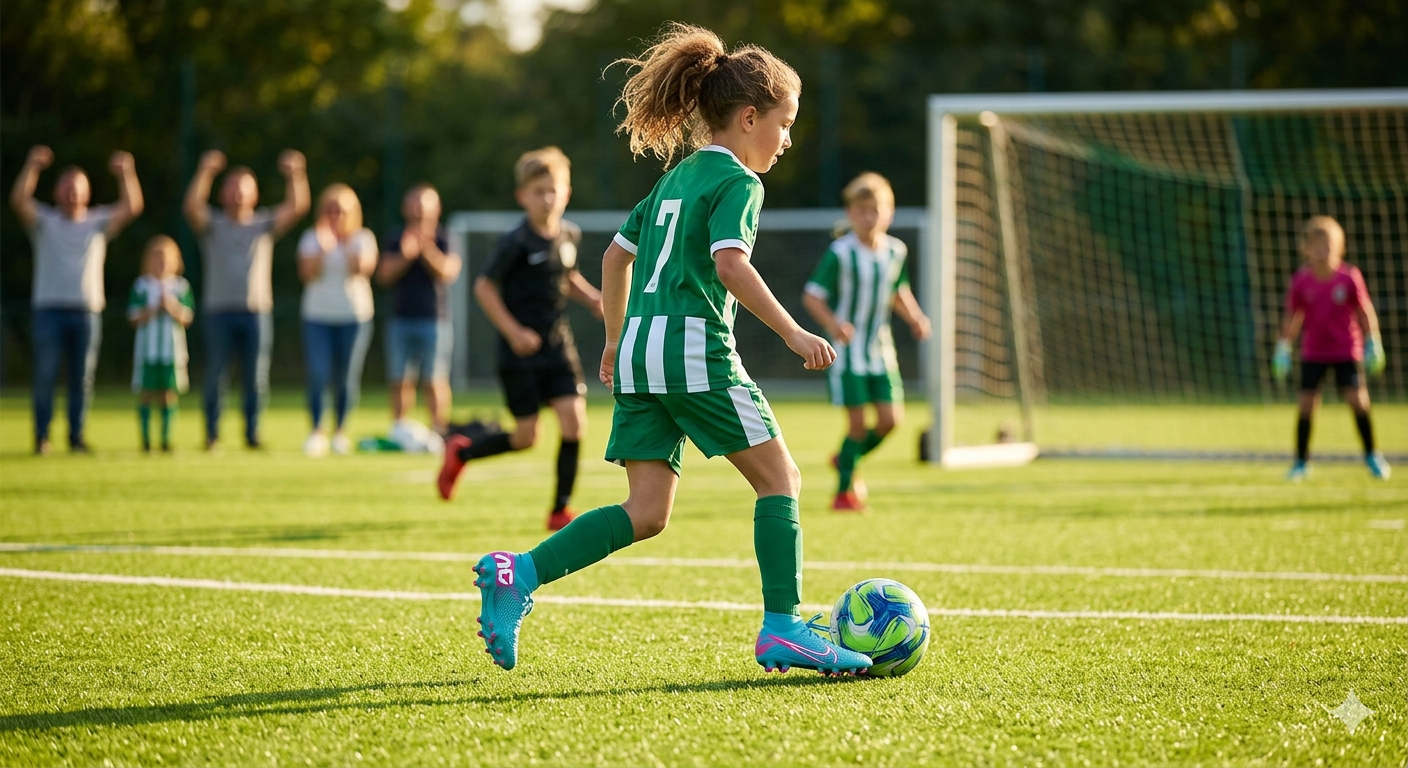
Welcome to the ultimate guide for young athletes! Choosing the right girls football boots is about more than just a cool color. It is about feeling fast on the grass and staying safe while you play. Whether you are a beginner or a rising star, the right footwear helps you control the ball and run with confidence. In this article, we will explore everything from sizing to the best studs for different pitches. My goal is to help you find a pair that feels like a second skin so you can focus on scoring goals and having fun with your teammates.
Why Specialized Boots Matter for Young Players
Many people ask if there is a real difference between standard cleats and girls football boots. The answer is yes! Designers now create boots that fit the unique shape of a girl’s foot, which is often narrower at the heel. A better fit means fewer blisters and less sliding inside the shoe. When your feet are snug and supported, you can make sharp turns and sprint faster. Using the right gear also helps prevent injuries, keeping you on the field longer. It is an investment in your talent and your comfort during every match and practice session.
Top Features to Look for in Football Cleats
When shopping for girls football boots, you should check three main things: traction, material, and weight. Traction comes from the studs on the bottom. You need enough grip to stay upright but not so much that you trip. The material of the boot can be leather or synthetic. Leather is soft and stretches, while synthetic materials are light and easy to clean. Lightweight boots are great for speedy wingers, while sturdier boots offer more protection for defenders. Always look for a cushioned insole to keep your feet happy during long tournaments.
Understanding Different Pitch Surfaces
Not all grass is the same! You must match your girls football boots to the ground you play on. Firm Ground (FG) boots are the most popular and work well on natural grass. If you play on artificial turf, you should look for AG (Artificial Grass) studs, which are shorter and rounder. Playing with the wrong studs can lead to slipped ankles or worn-down shoes. I always suggest checking your local league rules, as some indoor centers require specific non-marking soles to protect their floors. Being prepared for any weather or surface is part of being a pro.
Comparison Table: Choosing Your Boot Style
| Feature | Firm Ground (FG) | Artificial Grass (AG) | Multi-Ground (MG) |
| Best For | Natural dry grass | 3G or 4G synthetic turf | Mixed surfaces |
| Stud Shape | Bladed or conical | Short, hollow circles | Mix of stud lengths |
| Grip Level | High | Medium | Balanced |
| Durability | Standard | High | Very High |
How to Get the Right Fit Every Time
Finding the right size for girls football boots can be tricky because sports brands often fit differently than school shoes. I recommend trying them on with the thick football socks you plan to wear. There should be a small gap—about the width of your thumb—between your toes and the end of the boot. This gives your feet room to breathe without being too loose. If the boots are too tight, your feet will ache by halftime. If they are too big, you might trip. Always walk and jog around the store to ensure they feel stable.
The Best Materials: Leather vs. Synthetic
In the world of girls football boots, the material changes how you feel the ball. Synthetic boots are very popular today because they come in bright colors and stay dry in the rain. They are also very thin, which helps you feel every touch on the ball. On the other hand, traditional leather boots are famous for being incredibly comfortable. They mold to your foot shape over time. If you have wider feet, leather might be your best friend. Both options are great, so it really comes down to which one feels better when you kick.
Stylish Designs and Trendy Colors
Let’s be honest: looking good on the pitch feels great! Modern girls football boots come in amazing shades like electric pink, neon green, and classic white. Some even feature designs inspired by professional players like Sam Kerr or Aitana Bonmatí. While style is fun, remember that performance comes first. Many brands now offer “unisex” styles that work perfectly for girls too. Whether you like a flashy look or something simple and black, there is a boot out there that matches your personality and your team uniform perfectly.
Protecting Your Feet from Injuries
Safety is the most important part of any sport. High-quality girls football boots provide ankle support and heel stability. This is vital for growing bodies. A reinforced heel cup helps prevent the foot from rolling during a quick change of direction. Some boots also feature “strike zones,” which are padded areas that protect the top of your foot when you kick the ball hard. By wearing well-fitted boots, you reduce the risk of common issues like shin splints or sore arches. Always listen to your feet; if they hurt, it might be time for a new pair.
How to Maintain and Clean Your Boots
If you want your girls football boots to last all season, you have to take care of them. Never leave them in a plastic bag overnight! Mud can dry out the material and make it crack. Instead, use a soft brush to remove dirt after every game. You can wipe them down with a damp cloth and let them air dry naturally. Avoid putting them near a heater, as high heat can ruin the glue and shape of the shoe. Taking five minutes to clean your gear shows you are a dedicated athlete who respects your equipment.
Budget-Friendly Options for Beginners
You don’t need to spend a fortune to get a great pair of girls football boots. Many top brands offer “entry-level” versions of their most expensive boots. These look almost identical to the ones the pros wear but cost much less. They are perfect for players who are still growing quickly. You can also look for last season’s models, which often go on sale. The most important thing is the fit and the studs, not the price tag. Starting with a reliable, affordable pair is a smart way to begin your football journey.
Tips for Breaking in New Boots
When you get a brand-new pair of girls football boots, don’t wear them for a full match right away. They might be a bit stiff at first. Start by wearing them around the house or during a light practice session. This allows the material to soften and adjust to your movement. Some players find that soaking their feet in warm water while wearing the boots helps them mold faster, but check the manufacturer’s advice first. Taking the time to break them in slowly will prevent painful blisters and ensure you are ready for game day.
Conclusion
Choosing your next pair of girls football boots is an exciting step in your soccer career. By focusing on the right fit, the proper studs for your pitch, and a style you love, you are setting yourself up for success. Remember that your boots are your most important tool on the field. They help you run, jump, and score. Now that you know what to look for, it’s time to pick your favorite pair and start practicing. Get out there, play hard, and enjoy every minute of the game!
Frequently Asked Questions
1. Can girls wear boys’ football boots? Yes, they can! However, girls football boots are often designed to be narrower, which might provide a better fit for female players.
2. How often should I replace my football boots? Most players need a new pair every season, especially if they are still growing or if the studs have worn down.
3. Are expensive boots always better? Not necessarily. While expensive boots have more tech, mid-range girls football boots are excellent for most club and school players.
4. Do I need different boots for indoor football? Yes, indoor football requires flat, rubber soles. Using girls football boots with studs on a hard court can be dangerous and slippery.
5. How do I stop my boots from smelling? Always take them out of your bag to air out. You can also use specialized shoe deodorizer sprays or baking soda pouches.
6. Should I buy boots a size larger for growth? It is okay to have a tiny bit of room, but never buy them too big. Loose girls football boots can cause trips and ankle injuries.
