
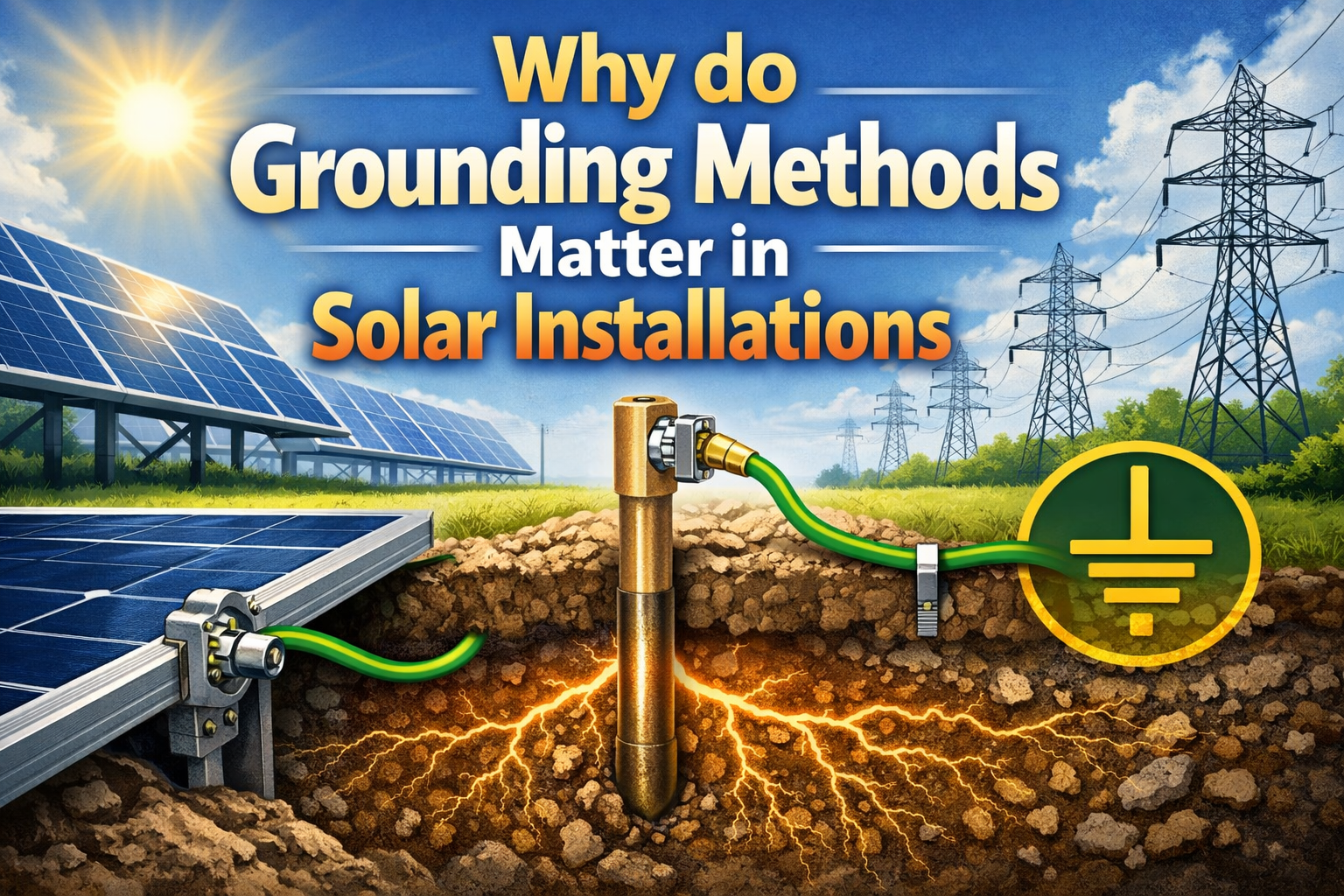
Grounding in a solar installation is not just a technical checkbox; it is a safety pathway that helps control what happens when something goes wrong. Solar arrays sit outdoors, connect metal parts across a roof, and operate in weather including rain, wind, and lightning. If a fault occurs, such as damaged insulation, a loose connector, or water intrusion, electricity can energize metal frames or racking. Grounding provides a low-resistance path for stray current to return to the electrical system so that protective devices can trip quickly. It also helps stabilize voltage, reduce the risk of shock, and limit damage during surges. Because solar systems combine DC and AC equipment over long cable runs, grounding methods must be carefully coordinated so that every metal component is bonded and every conductor has a clear path. When grounding is done correctly, it supports reliability, smoother inspections, and safer long-term operation.
How Grounding Builds Safety
-
Bonding Metal Parts Into One Safe Network
Solar installations include many metal parts, such as module frames, rails, clamps, junction boxes, and conduit. Bonding connects these parts electrically, so they act as one continuous network instead of isolated pieces that could become energized differently. This matters because a single fault on one module should not leave another rail segment floating at a dangerous voltage. Bonding is often performed using approved hardware, such as bonding clamps, bonding washers, and listed mid clamps, which bite through anodized coatings to establish solid metal-to-metal contact. The goal is not simply contact, but reliable contact that stays stable through heat cycles, wind vibration, and roof movement. Proper bonding also reduces the risk of arcing across tiny gaps because the system is kept at a consistent electrical potential. Installers must pay attention to coatings, corrosion, and torque, since loose hardware can break the bond path over time. Bonding becomes more complex when arrays are split across roof faces or when multiple rail sections are spliced, because every splice must maintain continuity. A well-bonded array is easier to troubleshoot because it behaves predictably, and inspectors can verify that metal parts are not left unconnected.
-
Equipment Grounding Conductors and Fault Clearing
Bonding connects metal parts, but grounding also requires a deliberate conductor path back to the service grounding system. This is usually done with an equipment grounding conductor that runs with the circuit conductors, connecting the array and electrical equipment to the grounding bus in the service equipment. When a fault energizes a metal surface, the grounding conductor provides a low-impedance route that allows enough current to flow to trip a breaker or activate protective devices. Without a proper grounding path, a fault might not draw enough current to trip a circuit breaker, leaving metal parts energized and dangerous. In solar systems, that fault-clearing function applies to both the DC and AC sides, depending on the system design. Conduit continuity can sometimes serve as part of the grounding path if it is installed correctly and listed for grounding. However, many systems still rely on dedicated grounding conductors to ensure reliability. Grounding conductor sizing and routing are important because long runs increase impedance, reducing fault current. This is why grounding design is not just about connecting to earth; it is about creating a fast, dependable path for protective devices to operate.
-
Surge Behavior, Lightning, and Real World Exposure
Solar arrays are exposed to the sky and often sit at the highest part of a home, which increases exposure to surges from nearby lightning strikes and utility switching events. Grounding and bonding help manage these surges by providing a controlled path for transient energy rather than allowing it to jump through equipment. Surges can travel along conductors and seek paths through inverters, optimizers, or monitoring equipment, damaging sensitive electronics. A coherent grounding scheme reduces the chance of destructive voltage differences between components. Surge protection devices can be added to reduce risk further, but their effectiveness depends on good grounding and short lead lengths. Grounding also interacts with soil conditions and the installation of grounding electrode systems, so installers must verify that the home’s grounding is present and properly connected. In areas like Grass Valley, where storms and rural feeder lines can cause voltage events, homeowners often value grounding details because they affect how well equipment withstands electrical disturbances over the years. This is also why bonding and grounding are closely checked during inspections, since failures can lead to shock hazards and equipment damage that may not become apparent until an unusual event occurs. Good grounding does not eliminate the risk of lightning, but it can reduce the path of damage.
Safe Current Path Matters
Grounding methods matter in solar installations because they control how fault current and surges move through the system, protecting people from shock and equipment from damage. Bonding ties all metal parts into a continuous network, while grounding conductors provide a low-impedance return path that allows breakers and protective devices to operate quickly during faults. Grounding also influences how the system handles lightning-related surges and utility voltage events, especially for rooftop arrays exposed to the sky. A coordinated grounding plan avoids weak points, reduces corrosion risk, and prevents confusing current paths that can cause noise or reliability issues. When grounding is installed with correct hardware, proper torque, and clear continuity across rails and equipment, the solar system operates more predictably and remains safer throughout its service life.
